Building the development of the national spatial industryIn the next 30 years

The spatial blueprint for national development

Establish a unified spatial planning systemMulti compliance reform

National Spatial Planning System

Enhancing the national spatial governance capabilityoptimize resources

Promote high-quality development

In 2019, the Central Committee of the Communist Party of China and the State Council issued

Several Opinions on Establishing a National Spatial Planning System and Supervising its Implementation.

Spatial blueprint for national development in the next 30 years

official document

The National Significance of National Spatial Planning

In the future, the vast majority of major construction projects in China will be implemented around the national spatial planning system Therefore, national spatial planning is not only a management tool, but also an important support for the implementation of national strategies.

urban construction
Optimize space and enhance livability quality
industrial layout
Agglomeration momentum and strengthening the real economy
Infrastructure construction
Build a solid foundation and smooth the development path
agricultural development
Stabilize grain supply and strengthen the foundation of agriculture, rural areas, and farmers
ecological protection
It will be an important support for the development of the country

Integration of multiple regulations: reconstruction of spatial governance system

Core management mechanism: Ecological protection red line, permanent basic farmland, urban development boundary

Implement systematic governance of national space resources

27
%
Urban Master Plan
38
%
land use planning
20
%
Industrial Development Plan
25
%
Ecological environment planning

2019:Opinions on the National Spatial Planning System

Establish a national spatial planning system, strengthen the authority of planning, achieve the integration of multiple regulations, and coordinate the governance and use control of the entire national spatial area.

2022:National Land Spatial Planning Outline

At the national level, the overall plan for national territorial space delineates three zones and three lines, coordinates the development and protection pattern, and ensures long-term development and security.

2022:Strategic planning for expanding domestic demand

Taking expanding domestic demand as the strategic basis, promoting consumption and investment, smoothing the domestic circulation, and enhancing the endogenous driving force of economic development.

Want to know more National Land Space Industry Information!

The country proposes to expand domestic demand and promote effective investment

Accelerate the construction of 5G, data center, industrial Internet, etc., consolidate the base of digital economy, and support digital, intelligent transformation and innovative development.
technology
New infrastructure construction
Agglomeration industrial resources and high-quality projects, improve supporting services, promote the development of industrial clusters, enhance the level of industrial chains and regional economic competitiveness.
humanities
Accelerate urban renewal
Agglomeration industrial resources and high-quality projects, improve supporting services, promote the development of industrial clusters, enhance the level of industrial chains and regional economic competitiveness.
industry
Building an industrial park
Improve rural roads, water conservancy, energy, communication, and public service facilities, enhance production and living conditions, and provide solid hardware support for rural revitalization.
People's wellbeing
Improve rural infrastructure

The National Significance of National Spatial Planning
National spatial planning is one of the most important fundamental plans for national development

In the future, the vast majority of major construction projects in China will be implemented around the national spatial planning system Therefore, national spatial planning is not only a management tool, but also an important support for the implementation of national strategies .
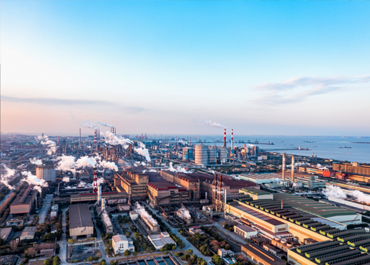

Industrial parks are the core carriers of regional economic development

Advanced Manufacturing Industrial Park

Focusing on high-end equipment, intelligent manufacturing and other fields, gathering leading enterprises and supporting industrial chains, promoting technological innovation and industrial upgrading, and enhancing the core competitiveness and intelligence level of the manufacturing industry

Digital Economy Industrial Park

By leveraging technologies such as big data, cloud computing, and artificial intelligence, we aim to cultivate a digital industry ecosystem, develop digital services and applications, and empower the digital transformation of the real economy.

New Energy Industry Base

Build an industrial cluster that integrates research and development, production, and application around new energy fields such as photovoltaics, wind power, energy storage, and hydrogen energy, to assist in the transformation of energy structure and the achievement of dual carbon goals.

Low altitude economic industrial park

Focusing on areas such as drones, low altitude flight, and air logistics, improving infrastructure and operational systems, cultivating new business models, and creating demonstration zones for low altitude economic development.